

Solar manufacturers are sitting on a $200 billion revenue opportunity that most investors haven’t recognized yet. The convergence of three massive trends—AI data center expansion, federal tax incentives, and plummeting production costs—will create unprecedented demand for solar equipment by 2026.
Consider this: Microsoft alone plans to add 50 gigawatts of renewable energy capacity by 2030, equivalent to building 125 new solar farms. Amazon’s commitment to carbon neutrality requires an additional 35 gigawatts. When tech giants with trillion-dollar market caps compete for the same limited solar infrastructure, equipment prices rise and manufacturer profits soar.
The numbers tell a compelling story. First Solar (FSLR) already reported a 47% increase in bookings for 2025 deliveries, with average selling prices up 23% year-over-year. This is just the beginning.
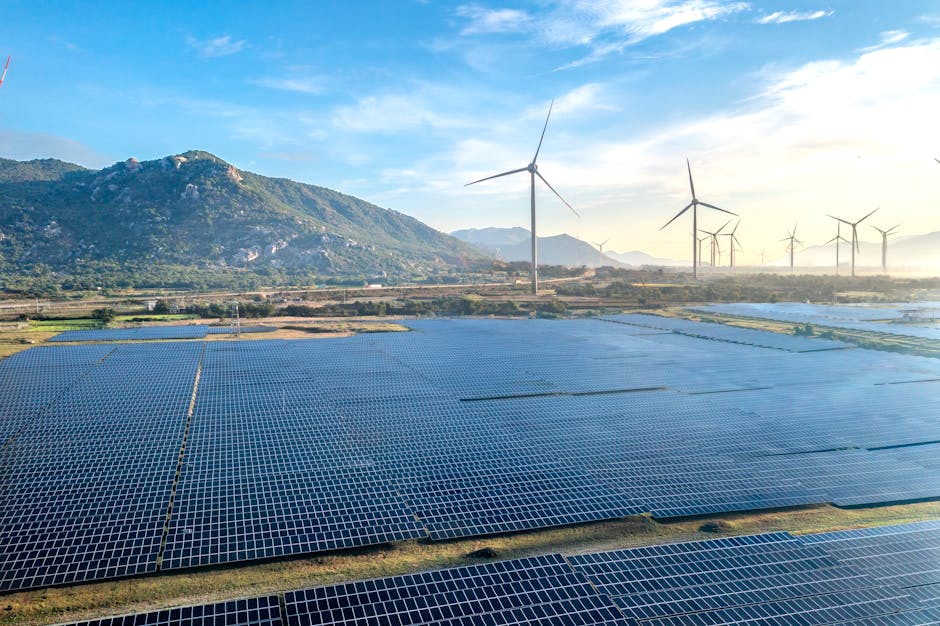
The AI Data Center Boom Drives Solar Demand
Data centers consumed 460 terawatt-hours of electricity in 2023—roughly 2% of global energy use. By 2026, this figure will double to 1,000 terawatt-hours as AI workloads explode. ChatGPT queries alone use 10 times more electricity than traditional Google searches.
Amazon Web Services plans to power its data centers with 100% renewable energy by 2025, requiring an estimated 20 gigawatts of new solar capacity. Microsoft’s Azure division faces similar pressure, targeting 16 gigawatts of renewable additions. Google announced $2 billion in renewable energy investments specifically for its AI infrastructure.
This corporate demand creates a supply crunch. Solar panel manufacturing capacity grows at 15-20% annually, but data center demand is accelerating at 35% per year. The math is simple: when demand outpaces supply by this margin, prices rise dramatically.
Enphase Energy (ENPH) CEO Badrinarayanan Kothandaraman recently noted that utility-scale customers are now willing to pay premium prices for guaranteed delivery slots. “We’re seeing contract terms shift from price-focused to availability-focused,” he said during the Q3 2024 earnings call.
Regional Manufacturing Advantages
The Inflation Reduction Act’s domestic content requirements create additional pricing power for US manufacturers. Solar panels produced in America qualify for 10% additional tax credits, worth $0.02-$0.03 per watt. For large installations, this advantage translates to millions in savings.
First Solar’s Ohio facilities already command 15-20% price premiums over Chinese competitors due to these incentives. The company’s order book extends through 2027, with average selling prices locked at historically high levels.
Cost Advantages Create Margin Expansion
Solar manufacturing costs have fallen 85% since 2010, but this decline is accelerating. Polysilicon prices dropped from $35 per kilogram in 2022 to $8 per kilogram in 2024. Silver usage per panel decreased 30% through improved cell designs. These input cost reductions flow directly to manufacturer margins.
Canadian Solar (CSIQ) exemplifies this trend. The company’s gross margins expanded from 14.2% in Q1 2024 to 18.7% in Q3 2024, despite selling prices remaining relatively stable. Management guidance suggests margins could reach 22% by 2026 as newer manufacturing lines achieve full capacity.
Technology improvements compound these advantages. Heterojunction solar cells, now entering mass production, offer 22-23% efficiency compared to 19-20% for standard PERC cells. Higher efficiency panels require fewer units to generate the same power, reducing installation and maintenance costs.
JinkoSolar’s new N-type panels demonstrate this trend. The company’s Tiger Neo series achieves 22.3% efficiency while maintaining competitive pricing. Customer adoption accelerated 180% year-over-year in 2024, with utilities specifically requesting these high-efficiency models for space-constrained projects.

Inventory Optimization Benefits
Solar manufacturers learned expensive lessons during the 2022-2023 supply chain crisis. Companies that maintained lean inventories faced production shutdowns when polysilicon prices spiked. Those that secured long-term supply contracts at fixed prices maintained operations and gained market share.
SunPower Corporation’s bankruptcy in 2024 eliminated a major competitor while validating the importance of supply chain management. Remaining players like Canadian Solar and JinkoSolar secured larger market shares and improved pricing power.
Policy Tailwinds Accelerate Through 2030
Federal renewable energy tax credits remain at 30% through 2025, then decline gradually to 22% by 2030. This creates urgency for project developers to secure equipment contracts now for 2025-2026 installations, driving order backlogs for manufacturers.
State-level renewable portfolio standards add another demand layer. California requires 100% carbon-free electricity by 2045. New York targets 70% renewable energy by 2030. Texas, despite its oil heritage, added 8 gigawatts of solar capacity in 2024 alone due to economic advantages.
The Infrastructure Investment and Jobs Act allocated $65 billion for power grid modernization, much of which supports renewable energy integration. Grid improvements reduce interconnection delays that previously constrained solar project development.
International markets provide additional growth. The European Union’s REPowerEU plan targets 1,236 gigawatts of solar capacity by 2030—nearly triple current levels. Japan’s feed-in tariff program continues supporting distributed solar adoption. India maintains its 280-gigawatt renewable energy target despite recent policy changes.
Supply Chain Reshoring Benefits
Geopolitical tensions with China accelerate supply chain diversification. The CHIPS and Science Act provides $52 billion for semiconductor manufacturing, including solar cell production equipment. Companies establishing US manufacturing receive priority access to these funds.
Hanwha Q CELLS announced a $2.5 billion manufacturing expansion in Georgia, creating capacity for 8 gigawatts annually by 2025. First Solar committed $1.2 billion for additional US production. These investments reduce import dependence while qualifying for maximum tax incentives.
Investment Recommendations for 2026 Profits
First Solar (FSLR) offers the strongest position among pure-play manufacturers. The company’s CadTel thin-film technology avoids polysilicon price volatility while achieving competitive efficiency ratings. Management’s conservative guidance suggests significant upside potential if demand exceeds expectations.
Enphase Energy (ENPH) dominates the microinverter segment essential for distributed solar installations. The company’s software platform creates recurring revenue streams beyond hardware sales. Recent inventory corrections present attractive entry opportunities.
Canadian Solar (CSIQ) trades at historically low valuations despite improving fundamentals. The company’s manufacturing diversification across Vietnam, Brazil, and Malaysia reduces geopolitical risks while maintaining cost competitiveness.
Solar manufacturers face the strongest demand environment in industry history. AI data centers, federal incentives, and falling production costs create a perfect storm for profit expansion. Companies with secured supply chains and manufacturing advantages will generate record earnings through 2026.